
Kiki was developed to enhance the user experience for renting short- or long-term studios and apartments in New York City. The project aimed to simplify the subletting process, addressing common pain points such as hidden fees and complex terms.
Our goal was to create an easy-to-use platform that allows users to seamlessly find and manage their rental options. Extensive user research and usability testing informed our design, ensuring that Kiki meets the needs of modern renters while fostering trust and transparency. Kiki aspires to set a new standard in the subletting market, offering a straightforward and engaging app for finding accommodations in the city.

As a product designer for Kiki, I applied my research and design skills to enhance the user experience for short- and long-term rentals in New York City.
I conducted user research to understand how subletting operates in the city, analyzing user behaviors and pain points across existing rental platforms. Based on these insights, I designed an interactive map feature that allows users to easily visualize available sublets in their preferred locations. I collaborated with Toby and Fiona to ensure our design aligned with user needs while addressing business objectives. My contributions led to a more intuitive app that simplifies the rental process and fosters user trust.
Imagine effortlessly finding and securing a short- or long-term sublet in New York City without the stress of hidden fees or complicated terms. That’s Kiki—simplifying the subletting experience for both renters and homeowners.
In New York City, high rental costs make finding affordable accommodations a significant challenge. While hotels are often prohibitively expensive, renting through other apps can be even more frustrating due to various limitations and hidden fees. Kiki addresses these issues by providing a transparent and user-friendly platform that simplifies the subletting process for both renters and homeowners. Whether seeking short- or long-term stays, Kiki empowers users to find suitable options while enabling homeowners to open their doors to tenants with confidence

UX and Prototyping
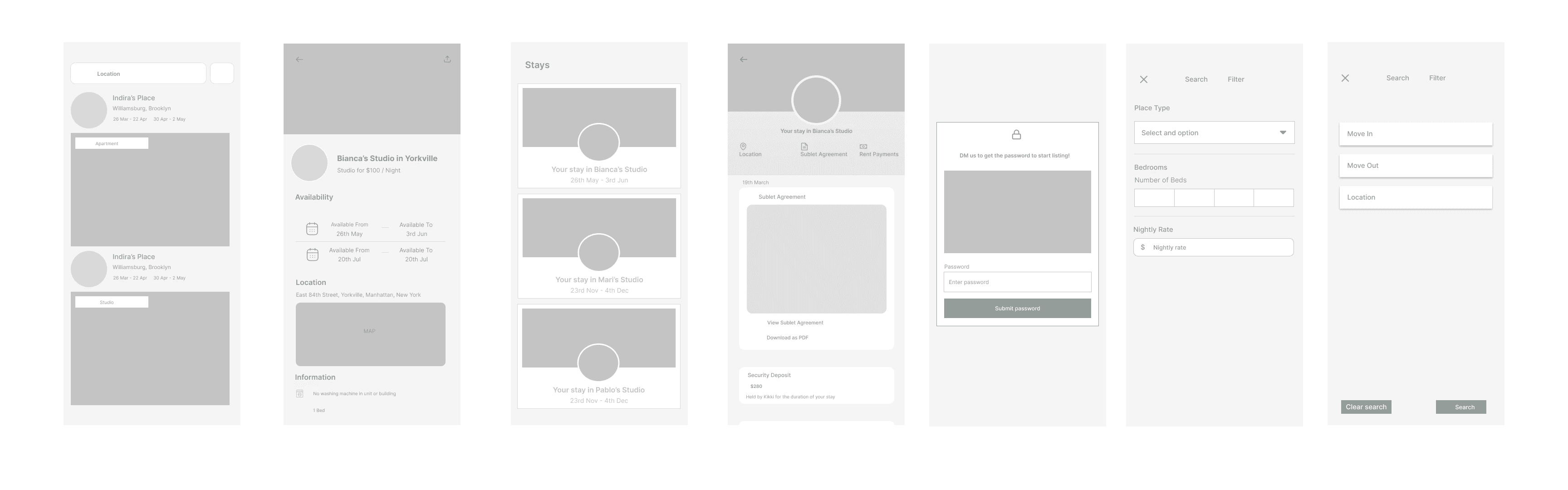
We explored the subletting landscape in New York City to refine the user experience and core features of the app. By creating rapid prototypes and engaging with diverse users—young professionals, students, and homeowners—we gathered valuable feedback that informed our design.
A key challenge was presenting transparent pricing and flexible agreements. We also aimed to showcase property listings effectively, ensuring users could easily browse and find sublets that meet their needs.
Incorporating Fintech principles was crucial in building a reliable sublet application:
Clarity
Clear and accessible financial information, such as security deposits and payment schedules, is essential for fostering trust. Users can straightforwardly view all relevant financial details.
Speed
Kiki ensures rapid transactions, allowing users to complete bookings quickly and easily. This efficiency is crucial for user satisfaction in the fast-paced subletting market.
Trust
By implementing secure payment gateways and showcasing user testimonials, Kiki builds credibility, encouraging users to engage without fear of financial mismanagement.


Our goal was to create an app that addresses the key challenges faced by modern subletters, including complexity, hidden costs, and a lack of transparency. Many users feel overwhelmed by convoluted terms and unexpected fees, leading to frustration and mistrust.
Beyond transparency, Kiki emphasizes genuine interactions between renters and homeowners, allowing users to get to know the people behind the properties. This approach fosters personal connections rather than viewing homeowners as mere hosts. By prioritizing clarity, speed, and trust, we aimed to differentiate Kiki from existing platforms. Our intuitive design simplifies the search for sublets and encourages open communication, providing a reliable solution tailored to the needs of any user who wants to travel to New York City and find an affordable place to stay.
Throughout our journey with the Kiki project, we discovered some important lessons that will shape our future work:
Value of User Feedback
Engaging with users throughout the design process was crucial. Their insights helped us understand what matters to them. By continually iterating based on their feedback, we made meaningful improvements that significantly enhanced the final product.
Significance of Trust
In the design world, building trust isn’t just nice to have — it’s essential. We learned that being transparent about financial aspects, like pricing and fees, can boost users' confidence and make them more willing to engage with the platform.
Importance of Simplicity
We found that a straightforward, clean design can make all the difference in user experience. By focusing on the features that matter most and cutting out the clutter, we made the app easier to navigate and more enjoyable to use.
Working on the Kiki Club NYC UX design has been an incredible experience, and I’m truly grateful for the opportunity to contribute my ideas and creativity to the project. Throughout this journey, I’ve learned how essential it is to listen to feedback and use it to improve my work. I take pride in the solutions we've developed and how they can positively impact users looking for sublets.
I've also come to appreciate the importance of teamwork and collaboration. Being part of a team where everyone brings their unique strengths and skills has made this process both enjoyable and rewarding. I’ve loved sharing ideas and learning from my teammates, which has helped me grow as a designer.
Kiki emphasizes the value of putting users at the center of design, especially in the Fintech space. By tackling common frustrations found in existing platforms, Kiki offers a fresh, transparent, and efficient alternative for those looking for sublets. The insights we gained from this process will not only enhance future projects but will also guide us in creating designs that prioritize clarity, speed, and trust.
